
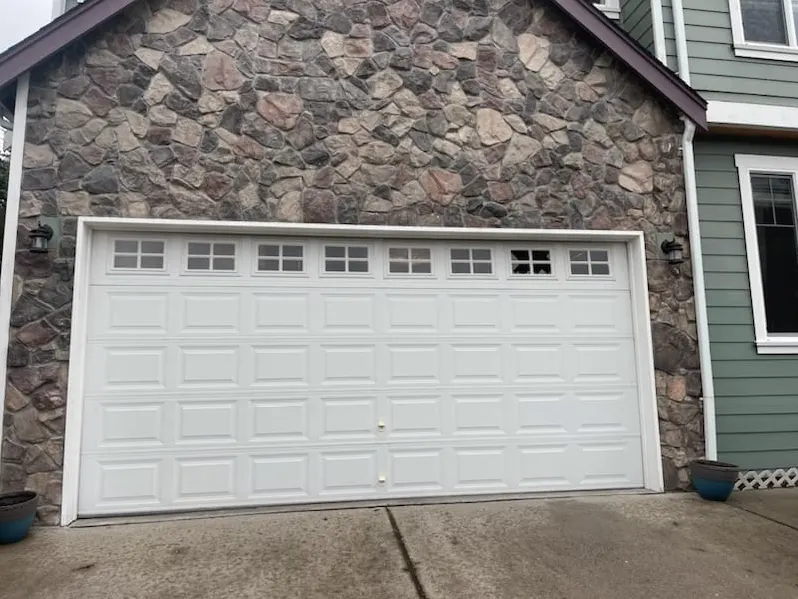
Short answer: insulated steel is the right call for most Fern Park homes
If you want one material that handles our heat, humidity, and hurricane-season wind without a lot of upkeep, it's insulated steel. Wood looks better, fiberglass resists moisture better, and aluminum is lighter — but steel is the only one that checks every box most homeowners here actually care about: wind-load rating, low maintenance, and reasonable cost. That said, each material has real trade-offs worth knowing before you buy.
Steel
Steel is the standard choice in Central Florida for a reason. Panels come in a range of gauges (commonly 24 to 27 gauge for residential doors), and heavier gauges hold up better to wind pressure and accidental impacts from lawn equipment or a wind-blown branch during an afternoon storm. Most steel doors are galvanized or coated to resist rust, but the bottom panel and corners are still the first place rust shows up if water pools against the door or gutters dump runoff nearby. Insulated steel (a steel skin on both sides with foam in between) also helps keep the garage cooler in summer and adds rigidity that matters for wind-load compliance.
Trade-offs: steel can dent, and once the coating is scratched through, rust can start, especially in humid, salt-tinged air closer to the coast. Touch-up paint and keeping drainage clear at the bottom seal go a long way.
Wood
Wood doors are the look a lot of homeowners want — carriage-house style, real grain, custom stain. The problem in this climate is moisture. Humidity swings between steamy summers and drier winter stretches cause wood to expand and contract, which can lead to swelling at the bottom panel, sticking against the frame, or gaps opening up at the seams over time. Afternoon downpours during hurricane season accelerate this if the door isn't sealed and repainted or restained regularly — realistically every one to two years for a door that isn't under deep eave coverage.
Trade-offs: highest maintenance of the five, but unmatched curb appeal and the easiest to refinish if it gets damaged. Wood also needs engineered reinforcement to meet wind-load requirements, which adds cost.
Aluminum
Aluminum doors are light, which makes them easy on garage door openers and torsion springs, and they genuinely don't rust the way steel can, making them a reasonable option for homes dealing with salt air. The trade-off is durability against impact — aluminum dents more easily than steel, and a stray piece of storm debris or a bumped car can leave a visible crease that doesn't pop back out. Aluminum also tends to flex more under wind pressure unless it's a heavier-gauge, reinforced panel built to current wind-load standards.
Trade-offs: great corrosion resistance, lighter load on hardware, but softer material that dents and needs a sturdier reinforced design to hold up in storm-force wind.
Fiberglass
Fiberglass doors are usually built over a steel or aluminum frame with a fiberglass skin, often molded to mimic wood grain. They resist moisture and salt air better than real wood, won't rot, and hold paint well in humid conditions. Over years of strong Florida sun, though, the fiberglass skin can fade, chalk, or become brittle, and the skin can crack or separate from the frame if the door takes a hard hit. They're a decent middle ground if you want a wood look without wood's swelling and repainting cycle.
Trade-offs: better moisture resistance than wood, but UV exposure over time is the real enemy, and impact damage is harder to repair cleanly than a dent in steel.
Composite
Composite doors blend wood fiber with resin or polymer, giving a wood-like appearance with much better resistance to rot, swelling, and insect damage than solid wood. They hold paint and stain well in humid conditions and generally need less upkeep than real wood over the long run. They cost more than basic steel doors and the selection of styles is more limited, but for homeowners who want the wood aesthetic with less seasonal maintenance, composite is worth a look.
Trade-offs: strong moisture resistance and low maintenance for a wood-look door, at a higher price point than steel or aluminum.
Side-by-side summary
- Steel: best balance of cost, wind-load strength, and low maintenance; watch for rust at seams and bottom corners
- Wood: best looks, highest maintenance, needs regular sealing/repainting against humidity swings
- Aluminum: rust-resistant and light, but dents easily and needs reinforcement for storm-rated performance
- Fiberglass: moisture-resistant wood look, but can fade or crack under long-term sun exposure
- Composite: low-maintenance wood look with good rot resistance, at a higher price than steel
What fits typical homes in this area
For most single-family homes across Fern Park, Casselberry, Winter Springs, Altamonte Springs, Longwood, Maitland, Winter Park, and Sanford, an insulated steel door with a wind-load rating appropriate for the house is the practical choice — it holds up to storm season, doesn't demand yearly refinishing in our humidity, and is easier to source parts for down the road. If curb appeal is the priority and you're willing to keep up with sealing, a composite or fiberglass door that mimics wood is a solid compromise. Homes closer to open water where salt air is a bigger factor may lean toward aluminum or a well-coated steel door specifically for the corrosion resistance.
When to call Fern Park Overhead Door Co
If you're seeing swelling at the bottom panel, rust bubbling through paint, a door that's suddenly heavier or harder to lift, or storm damage that's left a door off track, that's the point to call in a professional rather than patch it yourself. We handle Garage Door Replacement when a door has outlived its material or taken storm damage beyond repair, and we also do Off Track Door Repair when wind or impact has knocked panels out of alignment without requiring a full replacement. We'll walk the door, check the track and hardware, and give you a straight answer on repair versus replace based on what's actually wrong.
If your current door is struggling with our heat, humidity, or storm season, give Fern Park Overhead Door Co a call and we'll take a look.