
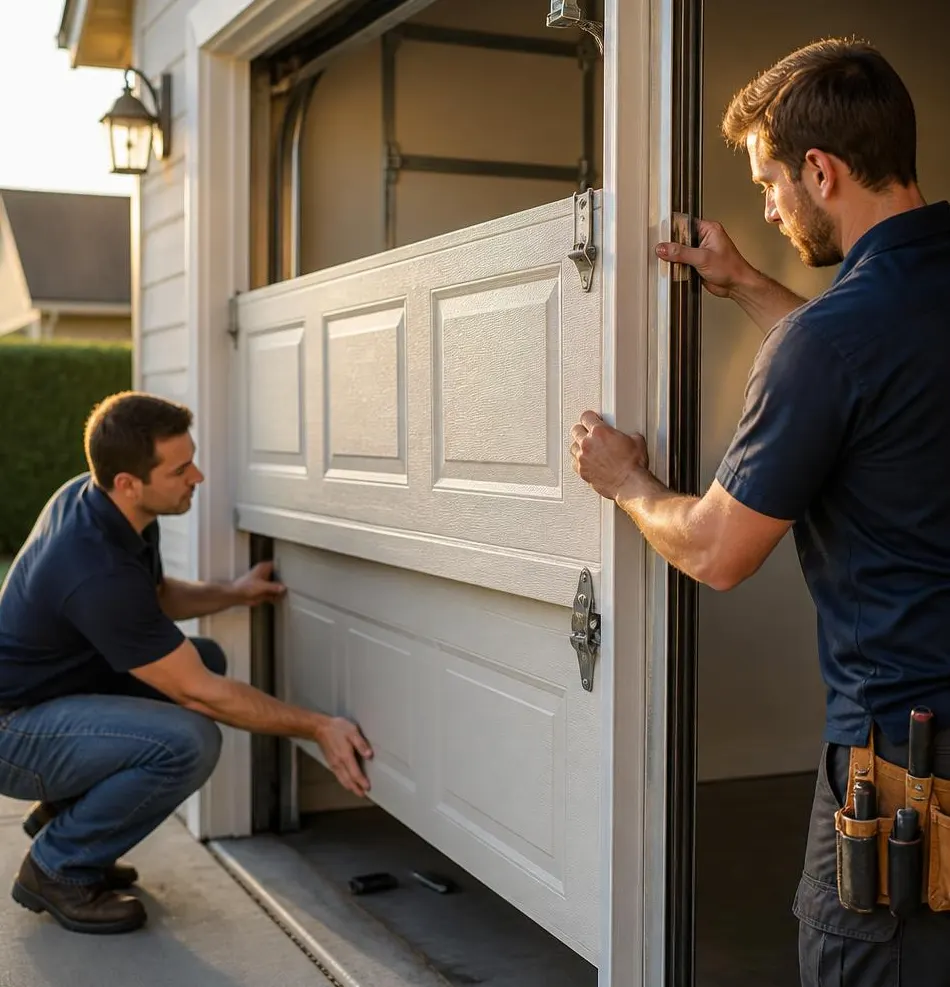
The Red Cord Nobody Thinks About Until It Matters
Skip learning your emergency release this season and the bill shows up at the worst possible time: a storm knocks out power, you're trying to get the car out before a tropical system rolls through, and you yank that red cord without knowing what's holding the door up. If a spring is already weak from months of humidity swings, the door can drop fast and hard, onto a bumper, a pet, or a hand. A new spring set runs roughly $150 to $350 installed, but a cracked windshield or a trip to urgent care costs a lot more than that, and both are avoidable with about five minutes of knowing what you're dealing with.
What the Emergency Release Actually Does
The cord with the red handle disconnects the door from the opener's trolley. Pull it and the door is no longer motorized; it moves only by hand, controlled entirely by its spring system and whatever muscle you put into it. It exists for exactly one reason: so a power outage or opener failure doesn't trap your car inside or outside the garage. It is not a maintenance tool, and it is not meant to be used casually just because the opener seems slow or noisy.
When Pulling It Is the Right Move
Afternoon downpours and hurricane-season outages are common enough here that most homeowners will use this cord at some point. Good reasons to pull it:
- The power is out and you need the car out or in before weather turns.
- The opener motor has failed but the door itself still moves freely by hand.
- You're testing the door's balance on purpose, as part of routine maintenance, with the door already down and under control.
In all of these cases, the door should already be fully closed, or you should be prepared to immediately take its full weight by hand.
When Pulling It Makes Things Worse
The cord becomes dangerous the moment the springs aren't doing their job correctly. A properly balanced door, with healthy springs, should lift with light hand pressure and stay roughly where you leave it, halfway up, say. If a spring is broken, stretched, or badly rusted from months of coastal salt air and moisture swings, that same door can weigh 100+ pounds effectively unsupported, and disconnecting the opener removes the only thing slowing its fall.
Pull the release cord on a door like that while it's open or partway open, and you're not getting a slow, controlled drop. You're getting a sudden slam that can:
- Crack the bottom panel or bend the track on impact
- Snap a cable that's already frayed from rust
- Injure anyone standing underneath or reaching to catch it
The same goes for an off-track door. If the door is already riding crooked in the rails, from a bent track, a broken roller, or storm debris, releasing it from the opener can let it jump the track entirely and fall sideways instead of straight down.
Check These Before You Pull the Cord
If you have even a few extra seconds before you need the door open, look for:
- A visible gap in the spring above the door, the coil should look continuous, not split with a few inches of daylight showing
- The door sitting unevenly or tilted when closed, a sign of a broken cable or one dead spring on a two-spring system
- Loud banging or a sharp noise you heard recently, often the exact moment a spring lets go
- Visible rust on the springs or cables, humidity and summer rain accelerate this faster than most people expect
Any of these mean treat the door as unbalanced. Don't pull the release while it's up. If it's already down, leave it down and get it serviced before using it again.
Resetting It Correctly
Once power is back or the opener is repaired, reconnect by pulling the cord again (most releases toggle) and manually moving the door slightly until the trolley re-engages with the track, you'll feel or hear it click into place. Run the opener through one full open-close cycle while standing clear, just to confirm it's grabbing the door properly before you rely on it again.
When to Call Fern Park Overhead Door Co
If you've spotted a gap in the coil, a door that hangs crooked, or cables with surface rust, that's a job for Garage Door Spring Repair, not a DIY spring swap. Springs are under heavy tension and the wrong move can cause the exact injury the release cord is supposed to prevent. If the door has come off its rails, even partially, our Off Track Door Repair service resets the rollers and checks the track alignment so the door travels straight again instead of binding or jumping. And if it's simply been a while since anyone checked the springs, cables, and rollers for the wear that Central Florida humidity causes, our Garage Door Maintenance visit catches that before it turns into an emergency release situation at all.
If your garage door in Fern Park, FL isn't lifting evenly, sounds different than it used to, or you're not sure your springs would hold if you had to use the manual release tonight, give us a call. We'll check it properly before the next storm does it for you.